Custom Conversation Hearts Svg Template Review
As a designer who spends more time than I care to admit staring at stitch density charts and debating the merits of various stabilizers, I approach every new digital embroidery file with a healthy dose of skepticism. The market is flooded with generic clip art that looks fine on a screen but falls apart when subjected to the tension of an embroidery machine. Recently, I pulled up the Custom Conversation Hearts Svg Template to see if it had the legs to survive a real-world production run for my small business. Here is my honest breakdown of how this design performs in the hoop.
The First Impression: Mood and Visual Personality
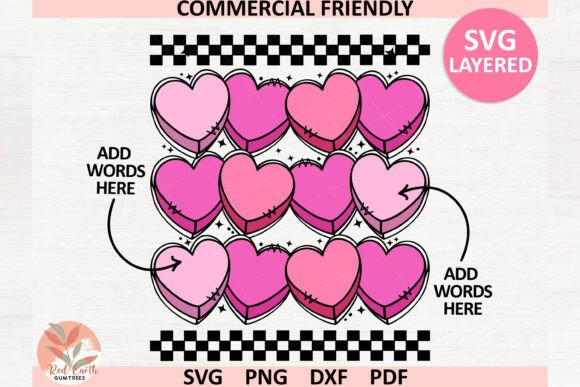
Conversation hearts are a nostalgic staple, but they can easily drift into "craft store cliché" territory if not executed with intention. When I first opened the files included in this download—SVG, PNG, DXF, and PDF formats—I was looking for clarity. The mood here is distinctly playful yet clean. It avoids the overly ornate, baroque styles that often get lost in stitching. Instead, it leans into bold shapes and clear typography, which is exactly what you want when dealing with small-scale details.
The visual personality feels like a modern take on vintage candy packaging. It’s bright, approachable, and inherently giftable. For a handmade product, this translates to immediate emotional recognition. Customers don’t need to think too hard about what the design represents; it communicates affection and fun instantly. This makes it a strong candidate for personalized gifts and seasonal merchandise where speed of recognition matters.
Real-World Application: From Screen to Stitch
I decided to test this concept by envisioning it on a few different substrates common in my workflow. The versatility of the Custom Conversation Hearts Svg Template shines when you consider its potential across various categories.
- Custom Apparel: Imagine a cropped sweatshirt or a heavyweight t-shirt featuring a scattered print of these hearts. The design works well as a repeating motif because the individual elements are distinct enough to maintain their integrity even when clustered. For sweatshirt embroidery, the clean lines would pop against heather grey or soft pink fabrics.
- Baby Items: This is perhaps the strongest use case. A onesie or a burp cloth with a single, centered heart design creates a sweet, boutique-level look. The simplicity ensures that the focus remains on the sentiment rather than complex stitching techniques that might irritate sensitive skin.
- Tote Bag Design: Canvas bags are a staple for the Etsy seller crowd. Using this as a focal point on a canvas tote allows for larger scale application. You could use the SVG format to create a large, impactful graphic that serves as both decoration and branding for your shop.
- Holiday Embroidery: While associated with Valentine’s Day, the color palette flexibility means this can be adapted for other occasions. Red and pink for romance, pastel mixtures for spring, or even monochrome black and white for a modern, edgy aesthetic. This adaptability increases the commercial lifespan of the asset.
Stitch Density and Clarity Considerations
One of the most critical aspects of any machine embroidery design is how it handles detail. With conversation hearts, the text inside the shape is the danger zone. If the font is too thin or the spacing too tight, the stitches will merge, creating a muddy blob. In my assessment, this template appears to prioritize legibility over intricate detailing. This is a smart choice. It ensures that even on lower-end machines or with less experienced operators, the final output remains crisp.
However, designers should always remember to check the stitch density before running a full batch. Dense areas can cause puckering, especially on lightweight fabrics. If you are planning to use this for an embroidered patch or a cap front panel, you may need to adjust the underlay stitches to ensure the fabric lies flat. Always inspect small details closely in your digitizing software to confirm that no overlapping threads will occur during the satin stitch phases.
Where to Use It Carefully
No design is universal, and the Custom Conversation Hearts Svg Template has specific constraints that every maker should respect. There are certain environments where this design might struggle to deliver a professional finish.
Avoid using this on highly textured fabrics like chunky wools or loose-weave burlap unless you are using a heavy-duty stabilizer and possibly a tear-away backing to support the needle penetration. Thin fabrics, such as silk or sheer chiffon, are also risky; the tension required to hold the design together might distort the material, leading to a warped final product. Similarly, stretchy knits require careful hooping and potentially a cut-away stabilizer to prevent the design from distorting during wear.
Curved surfaces, like the front of a baseball cap, present another challenge. While the design itself is simple, applying a flat graphic to a curved surface can result in visible gaps or stretched areas if not digitized specifically for curvature. If you are attempting this, consider using a smaller hoop size relative to the curve or opting for a flatter substrate like a tote bag or pillow cover.
Impact on Brand and Customer Trust
In the world of craft business and online retail, presentation is everything. A high-quality finished product builds trust faster than any marketing copy. When a customer receives an item embroidered with a clean, well-executed design like this one, it signals professionalism. It suggests that you care about the details.
This design supports brand consistency because of its neutral yet charming aesthetic. It doesn’t clash with other branding elements, making it easy to integrate into a cohesive shop identity. Whether you are selling commercial embroidery services or digital assets, having a reliable, versatile design in your library adds value. It allows you to offer customization options without reinventing the wheel every time.
Practical Designer Notes for Implementation
Before you commit to a production run, follow these steps to ensure success:
- Test on Scrap Fabric: Never run a new design directly onto your best inventory. Test the Custom Conversation Hearts Svg Template on scraps of the actual fabric you plan to use. This reveals issues with thread tension, needle type, and stabilizer choice.
- Check Thread Color Contrast: Ensure there is sufficient contrast between the thread and the fabric. Low-contrast combinations (like white thread on cream fabric) can look washed out and unprofessional.
- Review Black and White Mockups: Convert your design preview to grayscale to check for balance and weight distribution. If the design looks top-heavy or lopsided in black and white, it will likely feel unbalanced in color.
- Confirm Licensing: Since this is a digital download, verify the license terms carefully. Determine if you are allowed to sell finished items made from the design or if it is restricted to personal use only. This is crucial for small shop products intended for resale.
- Use Proper Stabilizer: Match the stabilizer to the fabric weight. Light fabrics need light stabilizers; heavy fabrics need robust support. Skipping this step is the number one cause of ruined projects.
Ultimately, the Custom Conversation Hearts Svg Template is a solid addition to any graphics or crafts resource library. It balances aesthetic appeal with technical feasibility, making it a practical choice for designers who want to create beautiful, marketable items without fighting their software or machine. Just remember to respect the fabric, test thoroughly, and let the design speak for itself.