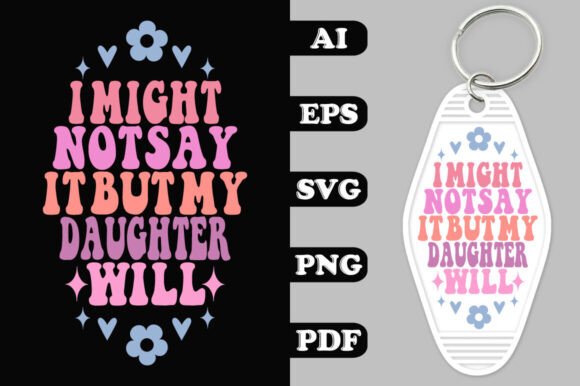
I Might Not Say It but My Daughter Will
When I pull a new embroidery file into my hoop, I am rarely looking for just another pretty picture. I am looking for viability. I need to know if the design will hold up on a custom apparel piece, if the lettering will remain legible after twenty wash cycles, and if the emotional punch of the quote lands with the customer before they even touch the fabric. Today, I am putting I Might Not Say It but My Daughter Will under the microscope. This is not just a novelty phrase; it is a specific mood, a specific relationship dynamic, and a specific marketing hook for anyone running a craft business or selling handmade goods on Etsy.
The immediate first impression of this design is one of relatable sarcasm wrapped in domestic warmth. The title itself suggests a retro or motel-style aesthetic, often associated with Retro Hotel Keychain SVG styles or Sarcastic Keychain SVG formats. When translated from a vector graphic to a physical stitch pattern, the visual personality shifts from flat text to textured statement. For an experienced designer, the challenge lies in preserving that "retro" grit while ensuring the embroidery doesn't look cheap or overly dense. If executed correctly, this design feels like a badge of honor for mothers who are tired, witty, and deeply proud of their kids.
Real-World Application: From Digital File to Finished Product
Let’s talk about where this design actually lives in the wild. I recently envisioned using I Might Not Say It but My Daughter Will on a heavy-weight cotton canvas tote bag for a local craft fair. The contrast between the rough texture of the bag and the smooth satin stitch of the lettering creates an instant tactile appeal. However, the success of this project hinges entirely on placement and scale. A small placement on the corner of a tote can feel like an accessory, but a large center-hoop application transforms the bag into a statement piece.
This design also screams potential for personalized gifts. Imagine a baby onesie or a nursery pillow cover. The phrase works beautifully as a humorous counterpoint to traditional sweet sentiments. It fits perfectly into the category of holiday embroidery, particularly for Mother’s Day or Christmas, where buyers are looking for something that acknowledges the chaos of parenting with a wink rather than a sermon. As a small shop product, it bridges the gap between digital product sellers who create mockups and Etsy sellers who ship physical items. The versatility allows you to market it as a personalized gift for grandmothers, a gag gift for friends, or a boutique branding element for a maternity store.
In terms of commercial embroidery, the design offers high perceived value. Customers are willing to pay a premium for designs that articulate their feelings better than they can themselves. This quote does exactly that. It turns a simple embroidered patch or a sweatshirt chest print into a conversation starter. When a buyer sees this on a sweatshirt embroidery project, they aren’t just buying thread and fabric; they are buying a shared cultural understanding of motherhood.
Technical Performance and Stitch Clarity
From a technical standpoint, evaluating any machine embroidery design requires a critical eye for detail. With phrases like I Might Not Say It but My Daughter Will, the typography is king. If the font is too thin or too ornate, it risks pilling out or becoming illegible when stitched. I always advise testing such designs by converting them to black and white mockups first. This strips away the distraction of color and forces you to evaluate the negative space and the balance of the letters.
The design likely utilizes a mix of fill stitch for bold backgrounds or graphical elements and running stitch or fine satin stitch for outlines. The key metric here is stitch density. If the density is too high, the fabric may pucker, especially on lighter materials. If it is too low, the design may look sparse and unprofessional. For a keychain sublimation svg style adapted for embroidery, the lines tend to be cleaner and more graphic. This translates well to embroidery if the digitizer understands how to simulate sharp edges without relying on excessive underlay stitches.
Thread color selection is equally critical. Because the tone is retro and slightly sarcastic, neon threads might clash with the intended vibe. Earth tones, muted pastels, or classic black-and-white combinations often work best to maintain that vintage hotel-sign aesthetic. You must check thread colors against your specific fabric choices. A light gray thread on a white shirt will disappear, while a bright yellow on a navy blue cap will pop. Always test on scrap fabric to confirm contrast levels before committing to a full production run.
Where Caution Is Required
Not every surface is created equal, and I Might Not Say It but My Daughter Will has limitations. You should avoid placing this design on highly textured fabrics like chunky knits or bouclé, as the stitches will get lost in the weave. Thin fabrics, such as lightweight jersey or silk, require a strong stabilizer to prevent distortion, but even then, the weight of the embroidery might cause sagging over time.
Stretchy fabrics present another challenge. While caps and hats are common applications, the curvature of a baseball cap can distort rectangular text if the design isn’t properly curved during digitizing. Be wary of attempting this on tiny hoop sizes. Small details, especially in smaller lettering, may merge together if the hoop size is too restrictive. Furthermore, if you plan to sell these items as durable merchandise, consider frequent washing. Designs with large areas of solid fill may wear down faster than those with open, airy layouts. Inspect the corners of any graphical elements closely; they are often the first to fray or lose definition.
Strategic Advice for Designers and Sellers
If you are a creative entrepreneur looking to add this to your inventory, start by creating printable mockup images. Show the design on a variety of products—a tote bag design, a kitchen towel, a baby blanket—to help customers visualize the final result. Visual recognition drives sales, and showing multiple use cases increases the perceived utility of the design assets.
Before you begin stitching, confirm the licensing terms. Just because you purchased the file does not automatically grant you commercial rights to sell unlimited finished products. Check whether the digital embroidery file allows for commercial use. If you are a handmade product maker, clarity on this point protects your brand reputation and avoids legal headaches.
Finally, remember that presentation matters. When showcasing your finished product, ensure the lighting highlights the texture of the thread. A close-up shot of the satin stitch quality can reassure buyers of the craftsmanship involved. This design works best when it feels intentional and polished. Avoid rushing the stabilization process or skipping the trimming stage. A clean finish elevates a simple quote into a professional item.
In conclusion, I Might Not Say It but My Daughter Will is a strong contender for any embroidery project targeting parents, gift-givers, or fans of retro humor. It balances emotional resonance with practical applicability. By paying attention to stitch density, fabric choice, and proper stabilization, you can turn this digital concept into a tangible, profitable, and beloved handmade item. Test it, refine it, and let the quality of your execution speak for the design.